
How to Plan Salmon River Trout Fishing with Kids
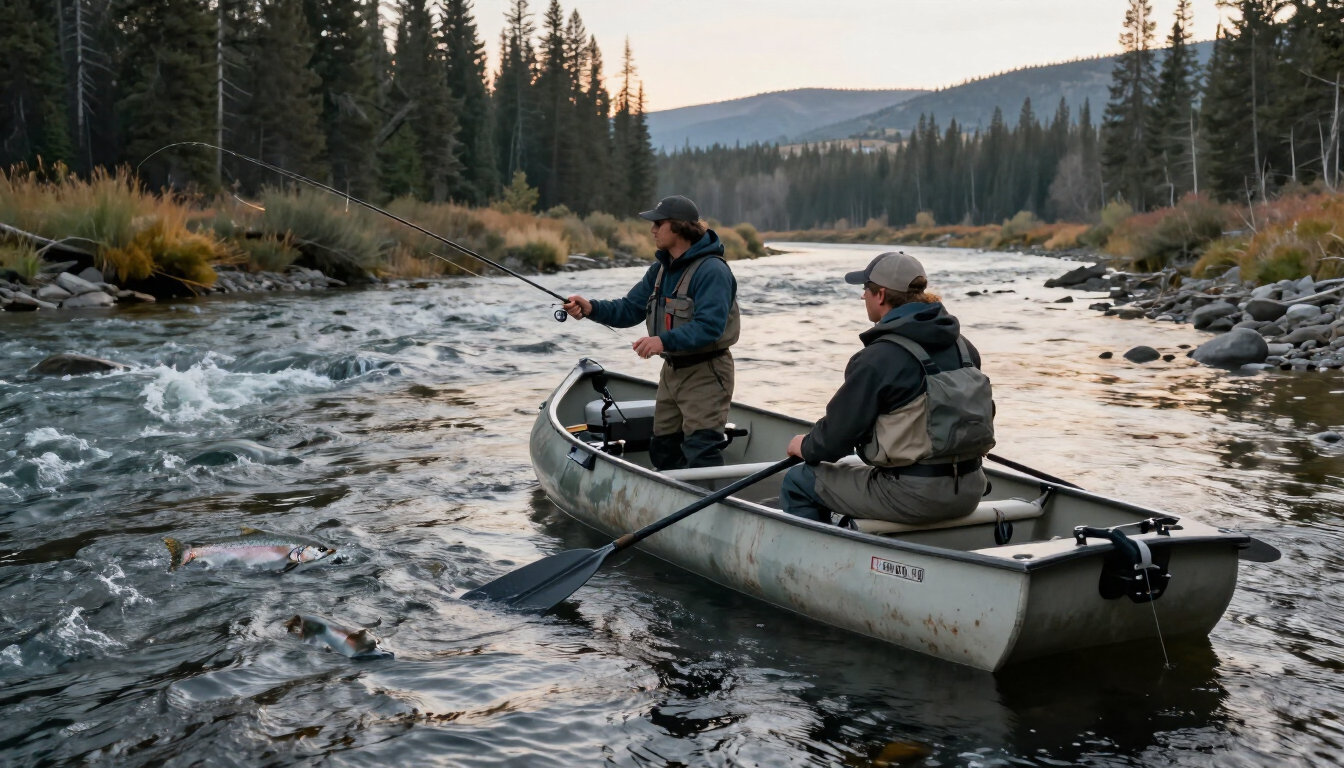
Salmon River trout fishing can be an excellent first guided fishing experience for a child age 12 or older. A professional guide provides instruction, equipment guidance, and steady encouragement while a parent shares the day. The goal is not a guaranteed catch—it is building confidence, patience, and positive memories together.
Is a guided trout fishing day right for a 12-year-old?
Yes. Rawhide River Trips’ guided trout fishing day is designed for newer anglers who are ready to learn and participate. The minimum age is 12, with no exceptions. The experience is easy to moderate, making it a practical choice for families who want an outdoor adventure without needing advanced fishing skills.
A parent and child can expect a day built around instruction, time on the water, and adapting to the river environment. The guide helps make the experience approachable, while the parent provides familiar encouragement and support.
Before booking, talk with your child about the day. Fishing involves quiet stretches, repeated practice, and attention to instructions. A child who understands that the experience is about learning—not nonstop action—is more likely to relax and enjoy it.
What does a guide teach during Salmon River trout fishing?
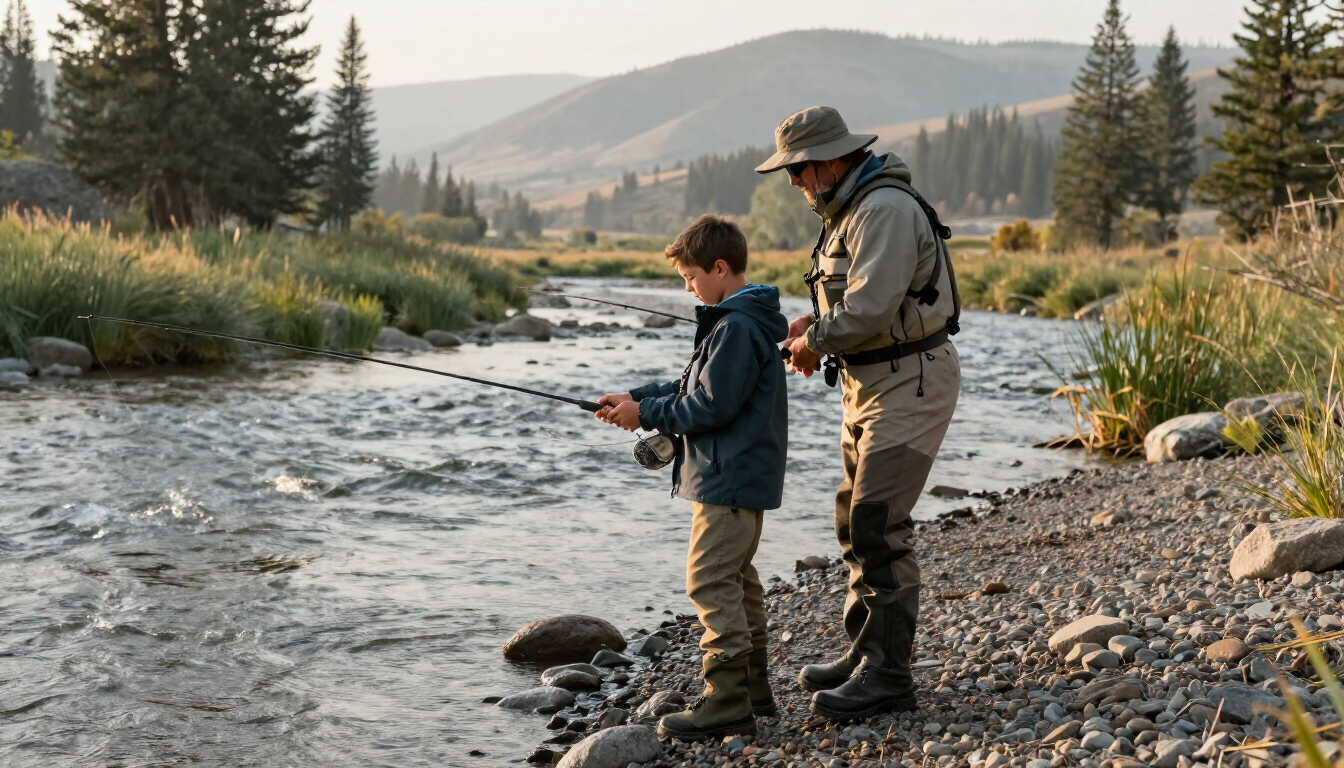
A guide’s job is to make the day understandable, organized, and enjoyable. Instruction may include:
- How to handle and care for fishing equipment
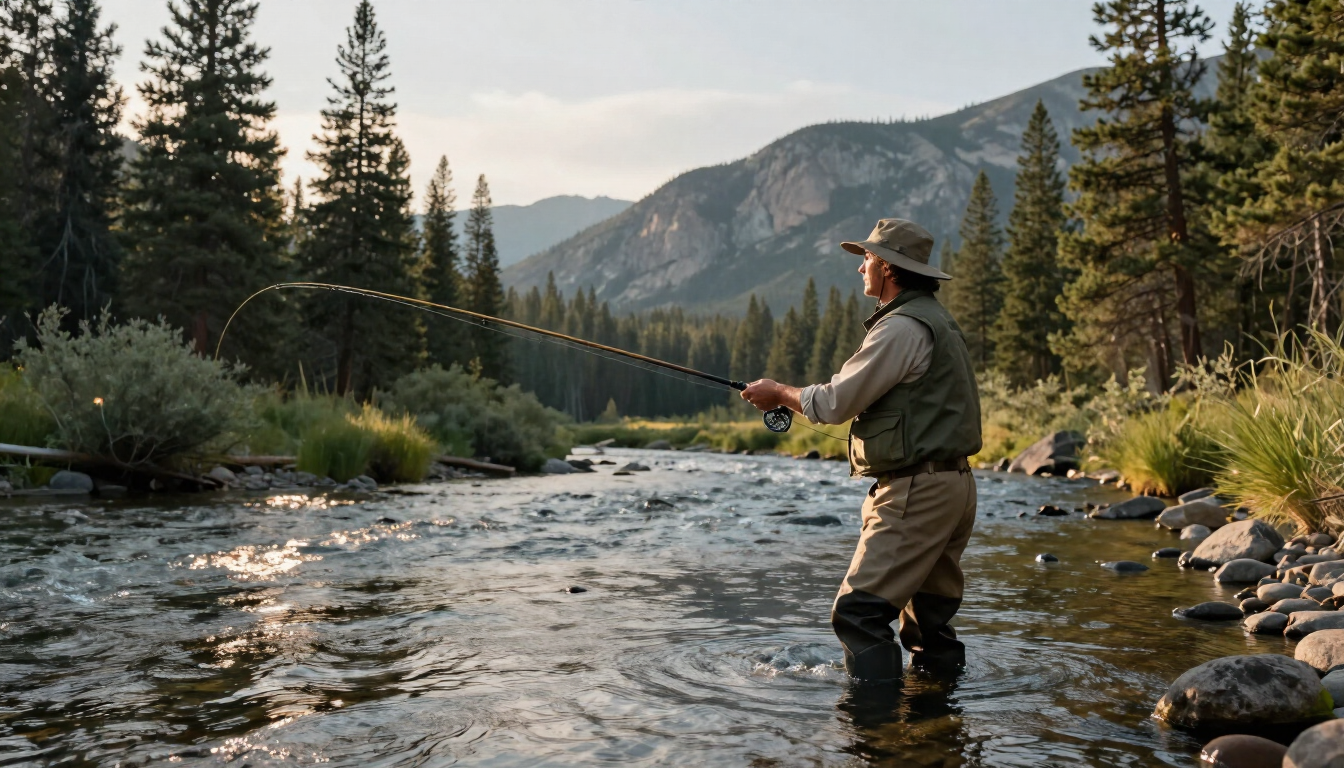
- How to follow basic casting and presentation techniques
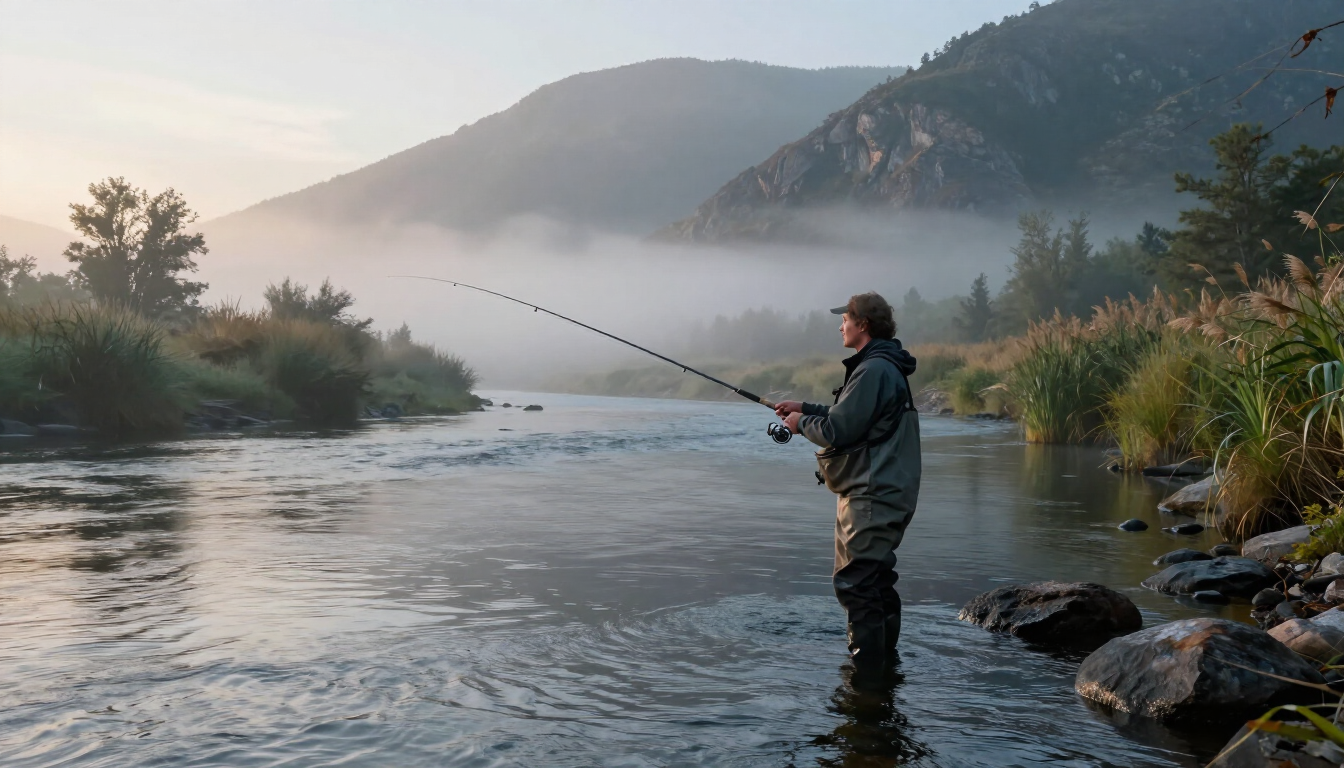
- How to watch the water and recognize useful signs
- How to respond calmly when something changes
- How to practice safe, respectful river behavior
The guide also adjusts explanations to the child’s experience level. A newer angler may need demonstrations, simple reminders, and time to repeat a motion. That is normal. Parents do not need to arrive with technical knowledge; asking questions is part of the learning process.
You can learn more about the overall experience on Rawhide River Trips’ Trout Fishing page.
How can parents help a first fishing day go well?
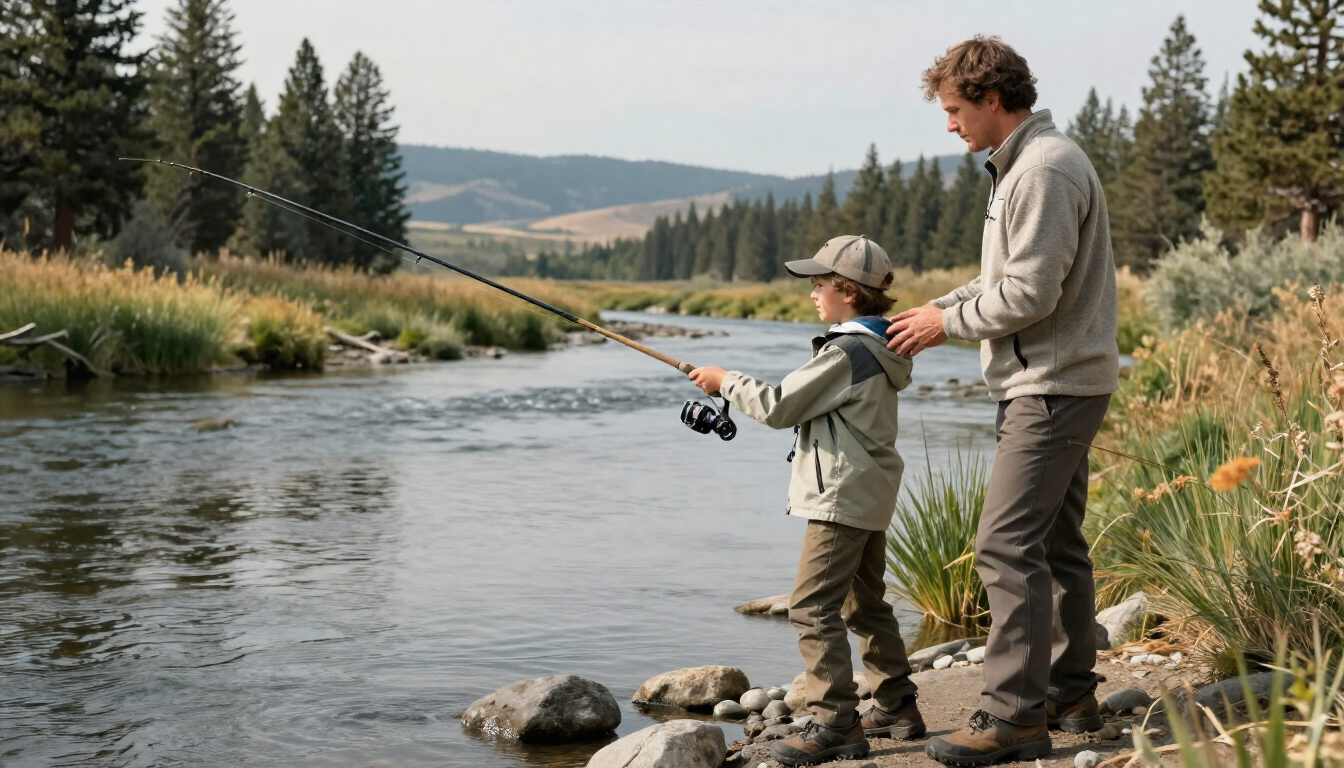
The most helpful approach is to stay encouraging and let the guide lead the instruction. Parents can support the experience by focusing on progress rather than performance.
Practice patience
Fishing can include quiet periods. A child may cast several times before feeling comfortable, or may need a break from concentrating. Avoid turning every moment into a correction. Let the guide offer technical feedback, while you reinforce effort with comments such as, “That was a good try,” or, “You are getting more comfortable.”
Patience also means allowing the day to develop at its own pace. Some children become engaged immediately; others need time to observe before participating. Both responses are normal for a first fishing day.
Keep expectations realistic
There is no catch guarantee. Conditions, fish behavior, and individual learning curves can all affect the day. The most useful expectations are simple: your child will receive guidance, practice new skills, spend time outdoors, and experience fishing with a professional.
If a catch happens, it can be an exciting bonus. If it does not, the day can still be successful when your child leaves with greater confidence and a better understanding of the activity.
Let the child participate
Invite your child to ask the guide questions, help prepare equipment when appropriate, and describe what they notice. Small responsibilities can make a young angler feel involved rather than like a passenger.
What should a child wear for a guided fishing day?
Choose practical layers that can handle changing outdoor conditions and movement. Clothing should be comfortable, secure, and suitable for spending extended time outside.
A useful clothing checklist includes:
- Layered clothing that can be added or removed
- Comfortable pants or outdoor clothing that allows movement
- A warm layer for cooler periods
- Sun protection, including a brimmed hat and sunglasses
- Sturdy, secure footwear appropriate for the guide’s instructions
Avoid clothing that is difficult to move in or footwear that feels unstable. Bring any personal items your child may need to stay comfortable, and ask Rawhide River Trips what to bring before the trip. The Gear Guide offers additional preparation information.
Parents should dress for the same conditions as their children. A comfortable adult is better able to stay patient, listen to the guide, and enjoy the day together.
What does a first fishing day feel like?
A first guided fishing day often combines anticipation, concentration, and gradual confidence. At the beginning, your child may watch closely while the guide explains the equipment and basic process. The first attempts may feel unfamiliar, and that is expected.
As practice continues, movements usually become more natural. The child may begin recognizing instructions, asking more questions, or noticing details in the river. These small changes are important milestones even when the day is quiet.
The experience may include periods of focused activity and periods of waiting. Encourage your child to notice the surroundings, listen to the guide, and take short breaks when appropriate. A calm attitude from the parent can make the entire outing feel more manageable.
A simple day-of mindset
Remind your child that they do not have to be perfect. They only need to listen, try, and communicate when they are unsure or uncomfortable. The guide is there to teach—not to judge.
For parents, the best mindset is to be present. Put the emphasis on sharing a new experience rather than comparing the day with anyone else’s fishing story.
What should families know before booking?
Rawhide River Trips’ guided trout fishing day is for participants age 12 and older, with a minimum age of 12 and no exceptions. It is an easy-to-moderate experience intended to welcome newer anglers while providing professional support throughout the day.
Before reserving your trip, consider whether your child is comfortable spending time outdoors, following safety directions, practicing a new skill, and being patient during slower moments. If so, this can be a rewarding way to explore fishing together near Salmon, Idaho.
For current regulations and official information, consult the Idaho Department of Fish and Game before your trip. Rawhide River Trips can answer questions about the guided experience, preparation, and how to plan your outing.
Your next step
A successful Salmon River trout fishing day is built on realistic expectations, patient encouragement, and professional instruction. For a child 12 or older, the experience can turn unfamiliar equipment and techniques into confidence through practice. Dress in comfortable layers, prepare for quiet periods, and let the guide teach while you focus on sharing the day. If this beginner-friendly adventure sounds like the right fit for your family, review the Trout Fishing page and contact Rawhide River Trips to plan your outing.